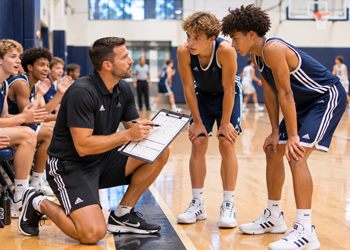
You look down the bench in the fourth quarter and realize two players barely touched the floor. Or you tried to sub fairly on the fly, lost track of who played, and watched your lineup's spacing and defense fall apart while parents watched from the bleachers.
Players improve from touches, not from standing in line--or sitting on the bench--and a pre-planned rotation turns fair playing time into real development for the whole roster. With a simple pre-game substitution plan and a 15-minute practice rotation you can run this week, you can feel relieved and stay in control on the sideline while every player gets meaningful game reps.
Why Fair Playing Time Builds Better Players (and Stronger Teams)
Fair playing time is not a scoreboard headache; it is a player-development tool. Drills build mechanics, but players need live game touches to handle defensive pressure, read defenders, and make decisions at game speed.
Yanking a kid to the bench after one turnover teaches fear, not basketball. As BasketballXpert notes in Common Mistakes of a Basketball Coach, "The way player learn is to play through mistakes. Problem solving and handling adversity are missing in todays game. Too many coaches just sit the kid on the bench and move on with the basketball game. Let the kids play the game, learn from mistakes and earn their successes."
For beginner players, keeping the game fun alongside fundamentals and fitness keeps them engaged, according to Beginning Coaches Should Focus on the Basics. Predictable rotations help with that because bench players know their next shift is coming and stay locked into the game instead of tuning out.
Set expectations before the first tip-off. In Thoughts on Becoming a Better Basketball Coach, BasketballXpert recommends holding a preseason parents meeting for every player: "Meeting lets you outline your philosophy concerning practice, cutting players, playing time, etc. It also gives the parents a chance to ask questions and meet the coaching staff."
Tell players and parents the same clear standard early in the year: effort, focus, and listening in practice build your habits, and guaranteed game shifts give every player a chance to apply them on the floor. Setting that baseline early will not stop every sideline question mid-season, but it gives you a fair, consistent answer you can point back to.
How to Build a Pre-Game Substitution Plan You Can Run Under Pressure
Trying to invent rotations while watching a press break is how coaches lose track of minutes. In Common Mistakes of a Basketball Coach, coaches are reminded to stick to their system and pre-game plans rather than panicking and scrapping the game plan when a game gets bumpy. Map out your rotation before you walk into the gym so you can coach the floor instead of doing math on the bench.
Pick a Rotation Structure That Balances Your Lineups
Build your rotation on paper around two things: your roster size (8-12 players) and your league rules (mandatory quarter shifts vs. open dead-ball substitutions). Fresh legs matter late--as Beginning Coaches Should Focus on the Basics points out, fatigue causes close games to fall apart in the final quarter as defenses tire and turnovers rise.
Instead of subbing five starters out for five reserves all at once, pair primary ball-handlers with developing players so every five-player group on the floor has spacing, ball security, and rebounding. A balanced lineup will not guarantee every possession looks clean against heavy pressure, but it prevents all-bench collapses that crush player confidence.
Use a simple pairing checklist before tip-off:
- Split your primary ball-handlers: Keep at least one confident handler on the floor during every shift so your offense can initiate sets.
- Balance size and rebounding: Pair your strongest rebounders across waves rather than stacking them all in one group.
- Stagger 2- to 3-player waves: In dead-ball leagues, rotating two or three players at a time keeps your offensive spacing and defensive shell intact.
- Sketch your spots early: Print BasketballXpert's free Printable Basketball Court diagram to map out court spacing and lineup assignments before the game starts.
Track Minutes Without Taking Your Eyes Off the Floor
Once the ball goes up, your eyes belong on spacing, matchups, and effort--not a clipboard. Pre-fill a simple shift grid before tip-off with player names down the left and 3- or 4-minute intervals across the top, then hand the sub-wave job to an assistant coach or reliable parent helper so they have the next two or three players ready at the scorer's table before the whistle.
If you want to pair playing time with simple game production, use BasketballXpert's free Printable Basketball Stats Sheet. As the guide explains, "The basketball stats sheet is fairly simple to use. Just print the basketball stats sheet, add your player's numbers, and start tracking their stats." It lets you track 2-pointers, 3-pointers, free throws (circle for attempt, slash for make), offensive and defensive rebounds, assists, steals, and blocks.
Keep BasketballXpert's Printable Basketball Court clipped right beside it as a quick visual tool during timeouts. Remember that the stats sheet tracks box-score production rather than clock minutes, so keep your pre-filled shift grid on top to track who is due in next.
What to Teach Players About Subbing In and Out
Even the best rotation falls apart if subs enter cold, lose their defensive matchup, or stand still on offense. Teach your players that checking in starts before the horn sounds, and drill a three-step check-in habit:
- Identify your matchup before crossing the line: Look at the player you are replacing and the opponent they are guarding before you step onto the court.
- Point and communicate on the floor: Call out your number or your matchup loud enough for teammates to hear. In The Basics of Playing Good Defense in Basketball, BasketballXpert notes, "The more information you and your team shares the easier it is to be prepared and in good defensive positions." On man-to-man defense, Tips on Better Man to Man Defense emphasizes staying aware of what is happening around you rather than locking solely onto the ball, so you can see cutters and help teammates.
- Sprint to your defensive or spacing spot: Do not jog into the play. As The Basics of Playing Good Defense in Basketball teaches, good defensive transition requires beating your matchup back down the court every time and getting into good defensive position.
Teach the bench how to respond when a teammate subs out, too. Coaches set the example for team sportsmanship and respect; when coaches model respect, players follow, according to Teaching Sportsmanship in Youth Basketball. Require players coming off the floor to hustle to the bench, and teach teammates to stand, clap, and give a high-five.
When you need to fix a mistake during a sub, keep your tone steady. As Common Mistakes of a Basketball Coach advises, "Use stoppages and substitutions to adjust and correct problems. If you must make adjustments real time then speak in a positive manner to the kids."
Practice Blueprint: Live 5-on-5 Shift Scrimmage With Timed Sub Rotations
Do not wait until Saturday to test your substitution routine. Run a 15-minute shift scrimmage once a week so players learn to sub in at game speed and play within mixed-skill lineups.
You can base your competitive rotation work on BasketballXpert's 4v4 Round Robin drill (10-15 minutes, Youth-College). In the standard drill, you split the squad into three color-coded teams of four on half court, with two teams playing and one resting. Possessions check outside the 3-point line--steals, rebounds, and made baskets must clear beyond the arc to become "hot"--and teams play to 10 points (2 points for a 3-pointer, 1 for a regular basket, no free throws) while you coach creativity, attacking the basket, movement, setting screens, strong 1v1 defense, and defensive communication.
As Coach Chris Johnson and the BasketballXpert Coaching Team explain in 4v4 Round Robin, "You can do this 3v3 or 4v4 or 5v5. I find 4v4 is really good because it is close to the regular game but allows more space on the court for the players to hone both offensive and defensive skills." To train your game-day substitution waves directly, run the 5-on-5 timed-shift adaptation below:
- Court Setup: Full-court 5-on-5 with two mixed-skill rosters of 6-7 players and a visible 3-minute timer.
- Rotation: Pre-assigned two- or three-player waves subbing in on every 3-minute whistle or dead ball.
- Time and Rep Target: Four 3-minute shifts totaling 12 minutes of live play, plus 3 minutes of quick coaching feedback between shifts (15 minutes total).
- Verbal Cues: "Next wave ready" (at 30 seconds left), "Point to your man" (on check-in), and "Share the paint" (when spacing shrinks).
Running timed shifts in practice will not prevent every missed matchup on game day, but doing it for 15 minutes a week turns chaotic dead-ball subs into an automatic habit.
Game-Day Adjustments: Foul Trouble, Blowouts, and Tight Fourth Quarters
Even with a clean plan on your clipboard, three game-day moments test your rotation. Handle them in real time without abandoning your whole bench:
- First-half foul trouble: Sub a player early when they pick up quick first-half fouls instead of parking them on the bench for an entire quarter. While they sit next to you, remind them why the fouls happened: as Tips for Becoming a Better Basketball Defensive Player explains, playing defense with your feet--moving and staying on your toes to beat the opponent to the spot--prevents the reaching fouls that put players in foul trouble.
- Blowouts: When a game gets lopsided in either direction, keep your rotation moving and shift the focus to specific skill habits--weak-hand finishes, making the extra pass, and disciplined half-court defense--so every minute stays meaningful for both starters and reserves.
- Tight fourth quarters: Be honest with your team and parents about how you handle close finishes based on your setting--keeping equal shifts on a developmental rec team, or shortening the rotation slightly on a competitive school squad while still protecting earlier minutes. Use timeouts to manage the moment: The Art of the Basketball Timeout notes that a timeout can stop an opponent's momentum, reorganize your team, set a situational play or defense, get a sub in, or give players a rest. Focus on one or two quick points--ideally one main issue--rather than bombarding players with instructions. Above all, stay poised, because as Managing the Overtime Period in Basketball warns, "If your players see their coach freaking out, they will freak out. There goes your chance to win. Stay calm. Communicate clearly with your players. Encourage them and exude confidence."
When you walk into the gym with a pre-planned rotation and a 15-minute practice habit behind it, you feel relieved and stay in control on the sideline--and every player on your roster gets the live touches that actually build their game.