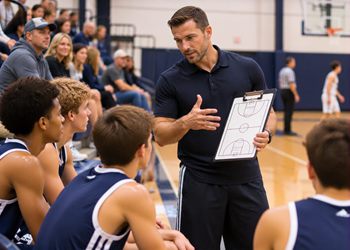
You spend two hours diagramming an inbound play, and ten seconds into the second quarter, a parent in row three yells "Shoot it!" while your point guard freezes at the wing. After the buzzer, another parent catches you by the locker room door to ask why their kid only played six minutes.
Sideline coaching, post-game playing-time ambushes, and second-guessing from the bleachers drain your energy and rattle young players. When kids are worried about what is coming from the stands, they stop listening to you and stop playing free.
You can stay composed, respected, and in control of the gym without picking fights in the hallway. A clear, documented coaching plan--from preseason expectations to printed practice stations and shared skill cues--prevents parent friction before tip-off and turns sideline critics into supportive basketball parents. Here is how to set clear boundaries, handle tough playing-time talks calmly, and run a structured practice plan that keeps families aligned and players focused this week.
Set Team Expectations Before the First Tip-Off
Most parent blowups in January start because nobody set the ground rules in November. Hold a 15-minute preseason parent meeting before your first game and hand every family a one-page expectations sheet so nothing feels made up on the fly.
A one-page sheet will not stop every frustrated text, and you still have to enforce it consistently, but it gives you a calm baseline to point back to all season. Keep your agenda tight and direct:
- Playing-time philosophy: Explain whether your league guarantees equal minutes or players earn minutes through practice habits, effort, and attendance, and make clear that you coach roles that help the whole team compete.
- Objective evaluation tools: Show parents the Printable Basketball Stats Sheet you use to track 2-point, 3-point, and free-throw attempts and makes, offensive and defensive rebounds, assists, steals, and blocks so decisions rest on real basketball habits rather than guesswork.
- Practice structure: Share how you run sessions with one or two clear goals instead of winging it, following the approach in The Importance of Planning in Basketball Practices so sessions stay focused, challenging, and fun.
- Sideline standards: Spell out cheering versus coaching, and explain how you handle post-game questions.
Watch for early warning signs during your first scrimmage or week of practice--parents hovering near the bench, barking instructions during water breaks, or muttering about rotations. As Shane writes in Teaching Sportsmanship in Youth Basketball:
"It only takes a firm hand once or twice and then your players and parents know improper behavior will not be tolerated."
Address the first small boundary crossing privately and early, before it becomes your gym's normal.
Handle Sideline Coaching and Post-Game Emotions
Your demeanor sets the temperature for the entire gym. In Teaching Sportsmanship in Youth Basketball, Shane notes that roughly 90% of the time a youth team behaves inappropriately, the root traces back to the coach's example.
"Defend your players, but also carry yourself properly as a coach a be a role model for the youngsters."
If you bark at referees or slam clipboards at the scorer's table, parents will mirror that energy from the bleachers. Model composure toward officials, scorekeepers, and opposing coaches first--it will not silence every loud fan on its own, but it gives you the moral authority to ask the stands to match your standard.
Keep One Voice on the Court During Games
Young players cannot process two sets of instructions at game speed. When a parent yells "Pass!" while you are calling a screen, the player hesitates, turns the ball over, and loses confidence.
What to watch for: Look at your players' eyes right after a turnover, a missed layup, or a foul. If a kid immediately glances up into the bleachers instead of finding you or getting back on defense, someone in the stands is coaching them from afar.
What to say on the bench: Pull that player aside during a dead ball or timeout and give them one clear anchor: "Eyes on me, play the next possession." Remind them that your voice is the only one they need to hear between the lines.
How to address persistent sideline coaching: Never shout into the stands mid-possession, because arguing across the court escalates tension in front of the kids. Wait for a quarter break or talk privately after practice, and keep it simple: "I appreciate how much you want them to succeed, but hearing two voices freezes them up. Let's keep cheering from the stands and let the staff handle the basketball cues."
Use the 24-Hour Rule for Post-Game Conversations
Nothing productive happens in a hallway five minutes after a buzzer. Adrenaline is high, both sides are tired, and a quick defensive answer turns a small question into a season-long grudge.
Put a strict 24-hour cooling-off rule on your preseason sheet: no playing-time or strategy talks right after a game. A 24-hour buffer will not magically make a parent agree with your rotation, but it strips the emotion out of the room so you can actually talk basketball.
Use these word-for-word scripts when a parent tries to ambush you outside the gym:
- In the hallway after the game: "I'm glad you care about their progress. Let's both take tonight to cool down, and shoot me a message tomorrow afternoon so we can set up ten minutes to talk."
- To open the next-day call or meeting: "Thanks for waiting until today. I want to talk through what we're seeing on film and in practice so we can pick one clear habit for them to work on this week."
Keep the conversation anchored on specific basketball habits and game observations rather than raw minutes on the clock.
Turn Playing-Time Questions into Development Plans
Parents usually ask about minutes because they do not know what earning minutes actually looks like. When you shift the conversation from "Why didn't she play?" to "Here are the two habits that earn court time on this team," most reasonable parents will partner with you.
Use the Printable Basketball Stats Sheet to track objective game behaviors--circling shot attempts and slashing makes, circling offensive rebounds and slashing defensive rebounds, and logging assists, steals, and blocks. A stat sheet alone will not capture every hustle play, so pair it with three concrete habits you can point to in practice:
- Box-outs: Finding a body in the flight of the ball, holding a low, wide stance, and moving the opponent out of the rebounding area before going up with two hands.
- Defensive stance and effort: Following the habits in Tips on Better Man to Man Defense--pressuring the ball, denying the middle of the court by using the sideline as an extra defender, keeping active hands in passing lanes, and staying aware off the ball. As Shane puts it, "The most important part of being a good man to man basketball defender is just flat out work and desire."
- Weak-hand ball security: Building off-hand confidence with Dribbling with Both Hands, where players dribble two basketballs down and back, keep their head up as skill improves, and work to make their weak hand just as reliable as their strong hand.
Pick one weekly skill target with the player first, then share that same target with the parent. Explain clearly: "Right now, turnovers against pressure are keeping him off the floor late in games. This week, his goal is keeping his head up on weak-hand drives in practice so he's ready for those fourth-quarter minutes."
Run a 15-Minute Parent-Visible Practice Blueprint
Parents trust what they can see. When bleachers are full of families watching messy scrimmages with zero instruction, they assume you are just rolling the balls out--and that is when sideline second-guessing starts.
In Why do Basketball Practices Fail?, Shane warns that drills break down when they lack a specific goal, immediate feedback, and player concentration:
"For a basketball drill to have its intended effect, the goal of the specific drill must be quite clear. Try to alert players of the goal in each specific drill."
Before practice, sketch your layout on BasketballXpert's Printable Basketball Court so you step onto the floor with a visible plan. Run this 15-minute, two-station block right at the start of practice when parents are watching from the bleachers:
- Setup: Two half-court baskets, 4 to 6 players per group, cones, and basketballs (each station sets up in under 3 minutes).
- Rotation: 7 minutes at Station 1, a 1-minute water break and switch, then 7 minutes at Station 2.
- Rep target: 15 to 20 game-speed reps per player at each station.
Station 1 -- 1vs1 Close-Down/Box-Out:
- Put a defender under the basket with a ball and a shooter at the free-throw area.
- The defender passes to the shooter, sprints out to close down under control, and contests without fouling.
- On the shot, both players fight for rebounding position and box out until the ball is secured, then switch roles.
- Coaching cues: "See ball, see man" on the close-out, and "Chin the rebound" as soon as they grab it with two hands.
Station 2 -- Basketball Shooting from the Elbow:
- Line players up with a target man at the wing or top and shooters cutting to the elbow around cones.
- Players pass to the target man, cut hard to the elbow, catch on balance, and shoot with clean body position and footwork.
- Remind ball-handlers approaching the spot of the fundamentals in How to Teach Dribbling in Basketball: knees bent, butt down, fingertips controlling the ball, and body shielding it from defenders.
- Coaching cues: "Eyes up" before the pass, and "Stick the landing" on the catch-and-shoot.
A single 15-minute block will not fix every skill gap overnight, so stay locked on immediate feedback--correcting footwork or box-out angles right after the rep so players feel the difference. Before you blow the whistle, tell watching parents what to look for from the bleachers: "Watch how loud our kids talk on close-outs today and how low they sit on every box-out." When parents know what good looks like, they start cheering for the right habits.
Give Supportive Parents Productive Ways to Help
Idle energy in the stands often turns into nitpicking. Give supportive parents real jobs that take logistics off your plate and channel their enthusiasm into team culture.
Assign clear volunteer roles at your preseason meeting:
- Game clock and scoreboard
- Official scorebook
- Team logistics (snack rotation, jersey checks, or gym-schedule reminders)
For families who want extra reps outside practice, do not leave them guessing at random videos online. In How to Teach Dribbling in Basketball, Johncd reminds coaches:
"Dribbling can be done virtually anywhere, so give the players some dribbling ideas that they can do 15-20 minutes a day."
Send home two free, printable BasketballXpert drills for optional 10-minute home reps--keeping it strictly optional so kids do not burn out:
- The Spider Dribble: Needs only one basketball and a small space. Players spread their legs and dribble in a figure-eight pattern through the legs and around the body, starting slowly for control before picking up speed while keeping the ball low.
- Little Around the World: Uses one basketball and spots 15 feet or closer around the lane. A player can run it solo or have a parent rebound while focusing on squaring up, setting feet, and holding a proper follow-through.
Finally, coach your parents on the car ride home. Ask them to praise effort, communication, rebounding, and cheering for teammates--and reinforce simple team rituals from Teaching Sportsmanship in Youth Basketball, like shaking hands before tip-off and thanking officials after the game regardless of the outcome. Leave shot selection and offensive sets to the coaching staff.
When your preseason expectations, practice diagrams, stat tracking, and home-rep handouts are all documented in one place, you stop reacting to the bleachers and start leading the gym. Print your court diagram and stat sheet before practice this week, set the tone early, and let your preparation turn potential critics into your best basketball parents.